School of Memory

I saw a great play at Theatre Y in Lawndale. In it, a man wrestles with his family’s history during the Spanish Civil War and its aftermath. Like so much else these days it’s difficult not to relate it to the unraveling of this country right now. Art is often that way. Whatever it’s about, we make it about our own problems and times.

Ross McElwee came to the Music Box for a Q&A after a 40th anniversary screening of Sherman’s March. The last time I saw it was in the late 80s at the Coolidge. It’s a movie that starts out to trace General Sherman’s bloody path through the South to conclude the Civil War but ends up a messy dive into the filmmaker’s love and family life. Fewer casualties but still plenty of damage.

I watched a couple more of McElwee’s films at home ahead of seeing his new one later this week. What ties all his movies together is his neurotic, often funny narration. He’s this awkward looming man with the camera on his shoulder. Not fully participating in the events of his life in favor of capturing them on film, yet making it all about himself anyway. I know that move very well.

A lot of the stuff this week is about where memory and family meet. There’s a part of any art that’s happening in the moment but most of it, necessarily, is concerned with some version of personal or societal past.

Christopher Nolan’s remarkable new adaptation of Homer’s Odyssey is yet another example. Anyone who goes to see it and doesn’t receive the clear message to the powers that be isn’t paying attention.

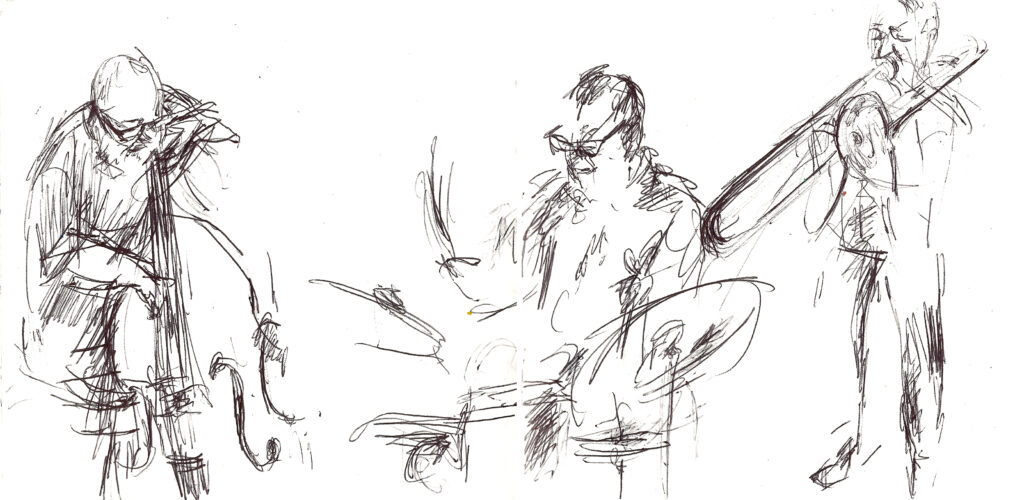
I recorded the Sound and Fury book-release Saturday at Tangible. It was a small gathering but friends showed up and there was good conversation.

I contributed some art for a new press.

Go see Carla Simón’s new one, Romería, then her previous two if you haven’t seen those. More family/memory business.

Listen to Tether by Alden Hellmuth. A new favorite.

K talked about her book on Salt Lake Dirt.

Connelly

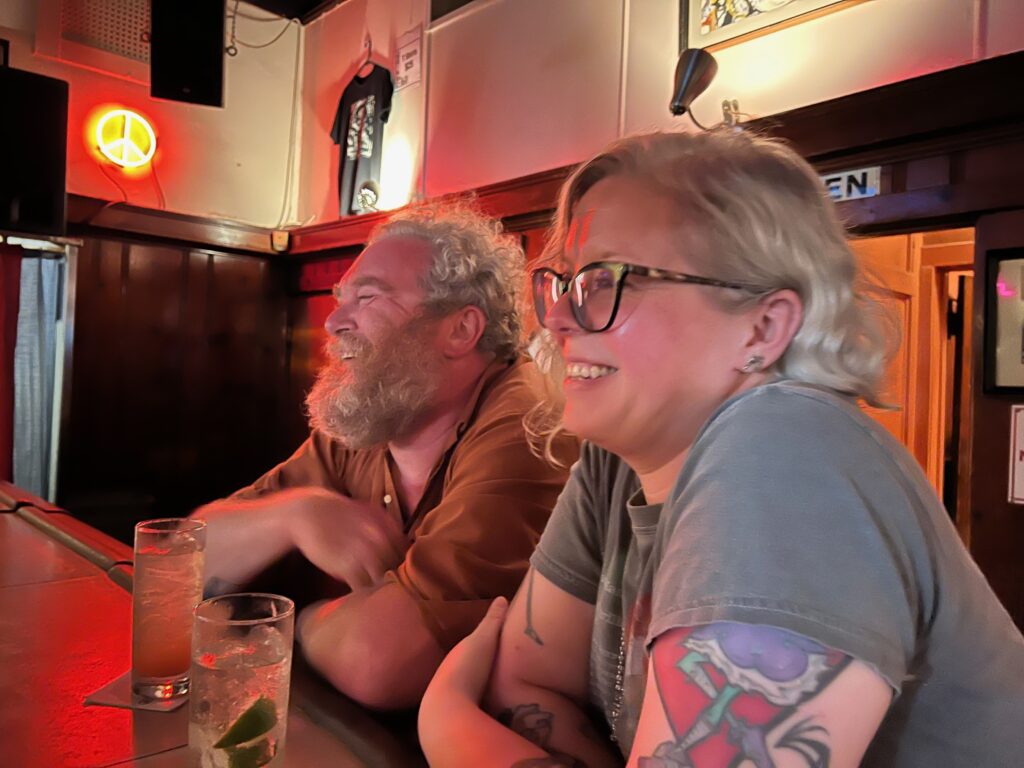
I met Chris Connelly in the late 90s. He was a regular delivery customer of Thai Lagoon. I brought food to his Humboldt Park apartment every few weeks, it felt like. He was also the friendly guy at Reckless Records—which set him apart for sure. Makes sense that the one guy who doesn’t have to be kind is the one who is.

I wasn’t any kind of expert on industrial music but even I knew that Connelly was already kind of a legend by then. He’d been in Ministry, Revolting Cocks, and Pigface. Plus many more bands I’d never heard of. And yet here he was ringing up my record with a smile on my face.

Chicago has been this way the whole time I’ve been here. It’s full of people with amazing resumes who don’t wear them like a billboard the way it’s done in other cities. Here people keep their heads down and go about their business. It’s a place to get things done, not to be noticed.

Connelly is preternaturally prolific. Even without keeping close tabs, I’ve listened to plenty of his music over the past thirty years. He’s tirelessly searching and rarely content to repeat himself. Also, many of his projects aren’t under his name. It would be a full-time job just to catalog all his work. But I hadn’t seen the man in at least a decade when I got together with K last year and found out that he was her work pal at the record store.

It was definitely one of those small-world moments. If you hang around long enough making art of almost any kind, you’ll eventually run into all the other lifers. There is always an influx of the young and an ever expanding exodus of the discouraged, but the ones who keep at it in spite of everything form an exclusive club. Seeing Chris again was one of those affirming episodes. We barely said a word apart from greeting one another but there was a recognition, a welcoming sighting of a fellow traveler.

K bought tickets for us to see Chris’s David Bowie tribute show in April. I have very mixed feelings about Bowie but this concert was a stunner start to finish. It was not a cheesy waxworks impersonation but a fully-embodied interpretation from a lifelong fan. And somehow, even as he interpreted another’s songs, Connelly’s own rang through as well. I have no idea how he did it.

Chris and his wife Shayna came to the Ornery Cuss book-release at Tangible and I asked him if he’d be up for recording a talk. He agreed and came over my place a few weeks later. I don’t know if I asked the right questions or whether fans of Connelly’s music will be satisfied but it was a lively conversation between two guys still chipping away at the craft.

I had a good time and I think he did as well.

You’re invited.

Bratby

I didn’t know the British kitchen-sink painter John Bratby wrote books till a couple weeks ago. A podcast I like mentioned a novel called Breakdown and I picked up a cheap copy on eBay.

What I knew of him before was his grubby canvases of apartments full of crap. They’re gleefully messy and look like they were painted in a fever. I also know they used his paintings to stand in for Gulley Jimson’s in the movie version of Joyce Cary’s The Horse’s Mouth—one of the best written/filmed portrayals of an artist’s life I know.

When I text Frank about the book, he says Bratby claimed The Horse’s Mouth was based on him but that can’t be true as he was only sixteen when it came out in 1944. Whatever the case, I’ve swallowed up the first third of Bratby’s book, which I assume is based, however exaggeratedly, on his own life.

It’s a vulgar, messy, laugh-out-loud trainwreck of a narrative about a successful painter who can’t control his own desires. But the best thing about it are the vivid, seen descriptions of the surroundings and denizens of “John Brady’s” world. I recognize these as the words of someone who’s spent his life looking.

Then, of course, there are the meaty ink illustrations throughout. I think this is a book I’ll hold onto.

I wrote about Colin Asher’s The Midnight Special.

I have some copies of The Sound and the Fury now if you’d like one from me directly. Or you can come to Tangible Books on the 18th for the book-release.